
- Browse Category
Subjects
 We Begin at the EndLearn More
 - Choice Picks
- Top 100 Free Books
- Blog
- Recently Added
- Submit your eBook
- Browse Category
We Begin at the EndLearn More
- Choice Picks
- Top 100 Free Books
- Blog
- Recently Added
- Submit your eBook
Modeling Of Turbulence Generated Noise In Jets
2021-01-26 18:17:01
A numerically calculated Green's function is used to predict jet noise spectrum and its far-field directivity. A linearized form of Lilley's equation governs the non-causal Green s function of interest, with the non-linear terms on the right hand sid...
Read more
A numerically calculated Green's function is used to predict jet noise spectrum and its far-field directivity. A linearized form of Lilley's equation governs the non-causal Green s function of interest, with the non-linear terms on the right hand side identified as the source. In this paper, contributions from the so-called self- and shear-noise source terms will be discussed. A Reynolds-averaged Navier-Stokes solution yields the required mean flow as well as time- and length scales of a noise-generating turbulent eddy. A non-compact source, with exponential temporal and spatial functions, is used to describe the turbulence velocity correlation tensors. It is shown that while an exact non-causal Green's function accurately predicts the observed shift in the location of the spectrum peak with angle as well as the angularity of sound at moderate Mach numbers, at high subsonic and supersonic acoustic Mach numbers the polar directivity of radiated sound is not entirely captured by this Green's function. Results presented for Mach 0.5 and 0.9 isothermal jets, as well as a Mach 0.8 hot jet conclude that near the peak radiation angle a different source/Green's function convolution integral may be required in order to capture the peak observed directivity of jet noise.
Less

Compare Prices
| Store | Availability | Book Format | Condition | Price |
|---|---|---|---|---|
| Indigo Books & Music | In Stock | Buy CAD 18.99 |
Available Discount
No Discount available
Related Books
View All
Can't Make This Stuff Up!: Finding the Upside to Life's Downs

We Are Not Friends (You Are Not Small)

Falter: Has the Human Game Begun to Play Itself Out?

The Secret Wife: A captivating story of romance, passion and mystery

Good Night, Little Blue Truck

Commander in Cheat: How Golf Explains Trump

Made for Me

Row, Row, Row Your Boat (Indestructibles Series)

American Moonshot: John F. Kennedy and the Great Space Race

Feed Your Best Friend Better: Easy, Nutritious Meals and Treats for Dogs
Hurricane Season
The Pout-Pout Fish

The Wonderful Things You Will Be

The Book Club

There Was an Old Lady Who Swallowed a Chick!

Secrets Between Us: An absolutely gripping psychological thriller

House of Shadows: An Enthralling Historical Mystery

Diary of an Awesome Friendly Kid: Rowley Jefferson's Journal

You Be You: Detox Your Life, Crush Your Limitations, and Own Your Awesome

Twinkle, Twinkle, Little Star (Indestructibles Series)
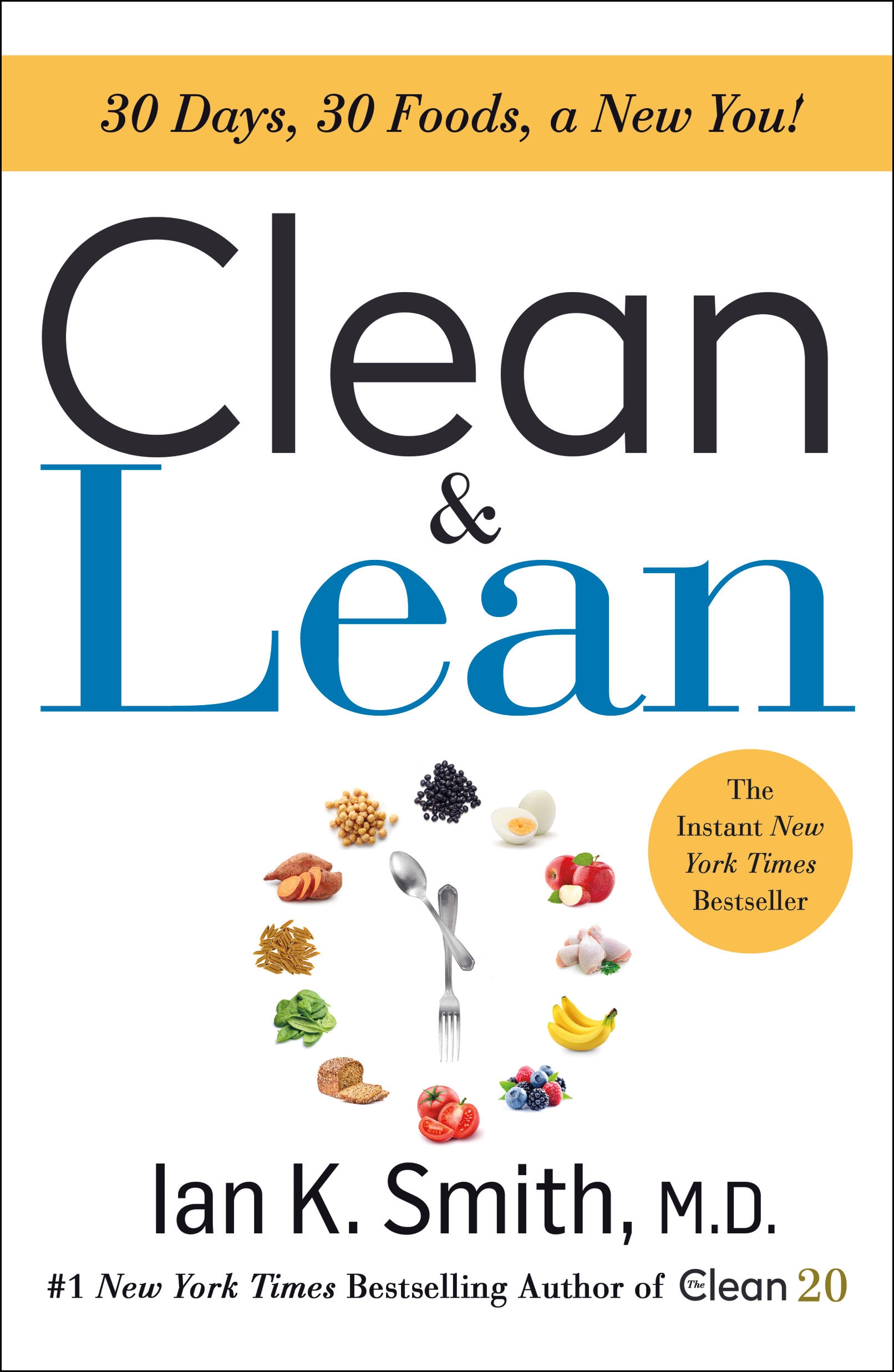
Clean & Lean: 30 Days, 30 Foods, a New You!

The Silent Woman (Cat Carlisle, Book 1)

Trillion Dollar Coach: The Leadership Playbook of Silicon Valley's Bill Campbell

Life Will Be the Death of Me: ...And You Too!

Going to School

Settings
Reflow text when sidebars are open.
