
- Browse Category
Subjects
 We Begin at the EndLearn More
 - Choice Picks
- Top 100 Free Books
- Blog
- Recently Added
- Submit your eBook
- Browse Category
We Begin at the EndLearn More
- Choice Picks
- Top 100 Free Books
- Blog
- Recently Added
- Submit your eBook
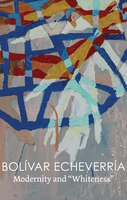
Modernity and "Whiteness"
2021-05-27 01:16:04
Bolívar Echeverría was one of the leading philosophers and critical theorists in Latin America and his work on capitalism and modernity offers a distinctive account, informed by the experiences of Latin American societies, of the social...
Read more
Bolívar Echeverría was one of the leading philosophers and critical theorists in Latin America and his work on capitalism and modernity offers a distinctive account, informed by the experiences of Latin American societies, of the social and historical forces shaping the modern world.
For Echeverría, capitalism and modernity do not coincide: modernity is a long-term historical phenomenon that involved a new set of relations between human beings and nature and between the individual and the collective, while capitalism is a particular form in which modernity has been realized. As Marx showed, capitalism is a mode of reproduction that involves the growing commodification of social life – everything, even human labor power itself, is turned into a commodity. Echeverría introduces the notion of blanquitud or “whiteness” to capture the new form of identity that is brought into being by the totalizing and homogenizing character of capitalism. While blanquitud includes certain ethnic features, it is not so much an ethnic category as an ethical and cultural one, referring to a type of human being, homo capitalisticus, which threatens to spread throughout the world, overcoming and integrating identities that might otherwise resist it. But capitalism is not the only form of modernity – there are alternative modernities. In the final part of the book Echeverría explores the baroque as a characteristic of Latin American identity and sees it as a way of theatricalizing and transforming reality that takes some distance from Eurocentric paradigms and resists the homogenizing forces of capitalism.
For Echeverría, capitalism and modernity do not coincide: modernity is a long-term historical phenomenon that involved a new set of relations between human beings and nature and between the individual and the collective, while capitalism is a particular form in which modernity has been realized. As Marx showed, capitalism is a mode of reproduction that involves the growing commodification of social life – everything, even human labor power itself, is turned into a commodity. Echeverría introduces the notion of blanquitud or “whiteness” to capture the new form of identity that is brought into being by the totalizing and homogenizing character of capitalism. While blanquitud includes certain ethnic features, it is not so much an ethnic category as an ethical and cultural one, referring to a type of human being, homo capitalisticus, which threatens to spread throughout the world, overcoming and integrating identities that might otherwise resist it. But capitalism is not the only form of modernity – there are alternative modernities. In the final part of the book Echeverría explores the baroque as a characteristic of Latin American identity and sees it as a way of theatricalizing and transforming reality that takes some distance from Eurocentric paradigms and resists the homogenizing forces of capitalism.
Echeverría’s analysis of the dynamics of capitalism and modernity represents one of the most important contributions to critical theory from a Latin American perspective. It will be of great interest to students and scholars of critical theory and postcolonial theory and anyone concerned with the global impact of capitalism on social and cultural life.
Less
Compare Prices
| Store | Availability | Book Format | Condition | Price |
|---|---|---|---|---|
| Indigo Books & Music | In Stock | Buy CAD 77.95 |
Available Discount
No Discount available
Related Books
View All
Diary of an Awesome Friendly Kid: Rowley Jefferson's Journal

House of Shadows: An Enthralling Historical Mystery

The Pout-Pout Fish

Made for Me
Trillion Dollar Coach: The Leadership Playbook of Silicon Valley's Bill Campbell

Can't Make This Stuff Up!: Finding the Upside to Life's Downs

Life Will Be the Death of Me: ...And You Too!

We Are Not Friends (You Are Not Small)

There Was an Old Lady Who Swallowed a Chick!

Going to School

Feed Your Best Friend Better: Easy, Nutritious Meals and Treats for Dogs

Hurricane Season

Falter: Has the Human Game Begun to Play Itself Out?

American Moonshot: John F. Kennedy and the Great Space Race

The Book Club

The Wonderful Things You Will Be

You Be You: Detox Your Life, Crush Your Limitations, and Own Your Awesome

Clean & Lean: 30 Days, 30 Foods, a New You!

Row, Row, Row Your Boat (Indestructibles Series)

The Silent Woman (Cat Carlisle, Book 1)

Twinkle, Twinkle, Little Star (Indestructibles Series)

The Secret Wife: A captivating story of romance, passion and mystery

Commander in Cheat: How Golf Explains Trump

Good Night, Little Blue Truck

Secrets Between Us: An absolutely gripping psychological thriller

Settings
Reflow text when sidebars are open.
