
- Browse Category
Subjects
 We Begin at the EndLearn More
 - Choice Picks
- Top 100 Free Books
- Blog
- Recently Added
- Submit your eBook
- Browse Category
We Begin at the EndLearn More
- Choice Picks
- Top 100 Free Books
- Blog
- Recently Added
- Submit your eBook
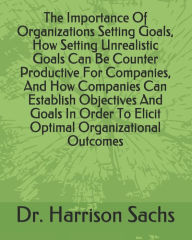
The Importance Of Organizations Setting Goals, How Setting Unrealistic Goals Can Be Counter Productive For Companies, And How Companies Can Establish
2020-05-26 19:42:47
This essay sheds light on the importance of organizations setting goals and elucidates how setting unrealistic goals can be counter productive for companies. Moreover, how organization can establish goals and objectives in order to elicit optimal org...
Read more
This essay sheds light on the importance of organizations setting goals and elucidates how setting unrealistic goals can be counter productive for companies. Moreover, how organization can establish goals and objectives in order to elicit optimal organizational outcomes is delineated in this essay. The eminent importance of organizations setting realistic and manageable objectives and goals is often overlooked and should be embraced since it plays a critical role in the company's long term success and longevity. Setting reasonable objectives and goals not only ensures that the organization members are working in unison to achieve the same overarching goals, but also bolsters employee morale and team synergy once the manageable objectives and goals have been achieved. Realistic objectives and goals not only provide an overarching synchronized focus among employees that can bolster team solidarity, but may also lead to lower employee turnover rates if employees are being generously compensated and incentized to meet these manageable objectives and goals. Goals clearly provide a common direction for employees to follow and can also help build organizational commitment among employees. On the other hand, setting unrealistic objectives and goals can be counter productive for organizations. Setting unreasonable objectives and goals can lead to higher employee turnover rates as more employees leave the organization due to not having a viable chance to be rewarded their incentives. Furthermore, unrealistic objectives and goals also decrease employee morale and impinge on the organization's productivity since employees clearly understand that these unmanageable objectives and goals are unattainable even if they were to exude their utmost best efforts. Moreover, non-viable objectives and goals can also adversely impact team synergy and team solidarity in addition to eliciting organizational inefficiencies when employees feel deterred to work hard. It can ultimately bear an eminently counter productive outcome when management establishes unrealistic objectives and goals that are out of the organizations reach which also causes employees to become demoralized and disillusioned by their jobs. It can ultimately bear an eminently counter productive outcome when management establishes unrealistic objectives and goals that are out of the organizations reach which also causes employees to become demoralized and disillusioned by their jobs.Management should be rational, thoughtful, and mindful when devising objectives and goals so that they can elicit the best possible organizational outcomes. When setting objectives and goals, companies should ensure that they are reasonable and are not unrealistic. Furthermore, goals and objectives should ideally be aligned with the organization's overarching mission. Moreover, organizations should offer generous incentives to reward employees for reaching the various objectives and goals. In order maximize productivity and decrease organizational inefficiencies, employees should also be acknowledged for their hard work and given feedback on how they can work more efficaciously. Monetary compensation and incentives should also be substantial and enticing. Additionally, employees needs should be accommodated and management should heed employee feedback so that necessary organizational changes can be implemented, especially if they want to draw forth optimal organizational outcomes. Employee productivity can be maximized when the organization's management can effectively work together with their employees and not against them. This may require management to make concessions to accommodate employees, such as providing them with higher monetary compensation, more breaks during shifts, a more generous benefits package, and more vacation days. An organization's management may need to embrace organizational change and be accommodating towards employee needs if they want to elicit optimal organizational outcomes
Less

Compare Prices
| Store | Availability | Book Format | Condition | Price |
|---|---|---|---|---|
| Barnes & Noble | In Stock | Paperback | Paperback | Buy USD 19.99 |
Available Discount
No Discount available
Related Books
View All
Finding Function in a Dysfunctional Organization Dr. R.
Step By Step Business Planning 101: Learn how to Create a Successful Business Plan and Strategy With This Simple Book

Kiribati's Political Economy and Capacity Development Asian

Psychology and Industrial Efficiency

The influence of network peer pressure on entrepreneurial intentions: Entrepreneurship education at the CDTM, Munich

Project Janitor: Cleaning Other Manager's Mess P Jamal El

Improving Sustainability During Hospital Design and Operation: A Multidisciplinary Evaluation Tool Stefano Capolongo Editor

Packaged for Success

Samenvatting van Ken Blanchard's Gung Ho! (Motivatie Collectie) Elly
The One Minute Leader: 52 Weeks to Success Dr. M.

What Every Middle School Teacher Needs to Know About Reading Tests

Monetize Your Culture: Create a Passionate, Committed Workforce that Actually Increases Your Bottom Line...and Costs You Nothing

Wiki-Systeme als Wissensmanagementtools
Assume Nothing, Think Again: Interrupting Assumptions in 5 Steps Mary L

The Idea Bucket

The Academy Keeper (Or Variety of Useful Directions Concerning the Management of an Academy, the Terms, Diet, Lodging, Recreation, Discipline, and Instruction of Young Gentlemen.)
Mentoring: A Business Strategy That Works

Business Plan: The Right Way To Create A Winning Business Plan
Sourcing of Services: International Aspects and Complex Categories

Business Poems by Nagendra Bharathi: Banking, Technology, Process, Relax

Enhance Your Financial Intelligence

Seven Secrets of Influence: Portable Power for the 21st Century

Scientific Advertising Claude

La gestione dello 'scazzo' - Guida pratica per Manager Paolo

Practical Approach to Bank Lending ROSELINE

Settings
Reflow text when sidebars are open.
