
- Browse Category
Subjects
 We Begin at the EndLearn More
 - Choice Picks
- Top 100 Free Books
- Blog
- Recently Added
- Submit your eBook
- Browse Category
We Begin at the EndLearn More
- Choice Picks
- Top 100 Free Books
- Blog
- Recently Added
- Submit your eBook
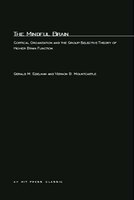
The Mindful Brain: Cortical Organization And The Group-selective Theory Of Higher Brain Function
2021-02-02 06:28:58
A proposal by two eminent biological scientists for a mechanism whereby mind becomes manifest from the operations of brain tissue.This significant contribution to neuroscience consists of two papers, the first by Mountcastle an, the second by Edelman...
Read more
A proposal by two eminent biological scientists for a mechanism whereby mind becomes manifest from the operations of brain tissue.
This significant contribution to neuroscience consists of two papers, the first by Mountcastle an, the second by Edelman. Between them, they examine from different but complementary directions the relationships that connect the higher brain—memory, learning, perception, thinking—with what goes on at the most basic levels of neural activity, with particular stress on the role of local neuronal circuits.Edelman''s major hypothesis is that "the conscious state results from phasic reentrant signaling occurring in parallel processes that involve associations between stored patterns and current sensory or internal input." This selective process occurs by the polling of degenerate primary repertoires of neuronal groups that are formed during embryogenesis and development. Edelman''s theory extrapolates to the brain the selectionistic immunological theories for which he was awarded the 1972 Nobel Prize in Physiology or Medicine. Mountcastle''s paper reviews what is known about the actual structure of various parts of the neo cortex. He relates the large entities of the neocortex to their component modules—the local neuronal circuits—and shows how the complex interrelationships of such a distributed system can yield dynamic distributed functioning. There are strong conceptual parallels between Mountcastle''s idea of cortical columns and their functional subunits and Edelman''s concept of populations of neurons functioning as processors in a brain system based on selectional rather than instructional principles. These parallels are traced and put into perspective in Francis Schmitt''s Introduction.
Less
Compare Prices
| Store | Availability | Book Format | Condition | Price |
|---|---|---|---|---|
| Indigo Books & Music | In Stock | Buy CAD 27.00 |
Available Discount
No Discount available
Related Books
View All
Row, Row, Row Your Boat (Indestructibles Series)

Clean & Lean: 30 Days, 30 Foods, a New You!

You Be You: Detox Your Life, Crush Your Limitations, and Own Your Awesome

The Silent Woman (Cat Carlisle, Book 1)

Feed Your Best Friend Better: Easy, Nutritious Meals and Treats for Dogs

Going to School

Made for Me

We Are Not Friends (You Are Not Small)

The Secret Wife: A captivating story of romance, passion and mystery

Can't Make This Stuff Up!: Finding the Upside to Life's Downs

Trillion Dollar Coach: The Leadership Playbook of Silicon Valley's Bill Campbell

Hurricane Season

Commander in Cheat: How Golf Explains Trump

The Pout-Pout Fish

Diary of an Awesome Friendly Kid: Rowley Jefferson's Journal

Falter: Has the Human Game Begun to Play Itself Out?

Twinkle, Twinkle, Little Star (Indestructibles Series)

Secrets Between Us: An absolutely gripping psychological thriller

Life Will Be the Death of Me: ...And You Too!

The Wonderful Things You Will Be

There Was an Old Lady Who Swallowed a Chick!

The Book Club

Good Night, Little Blue Truck

American Moonshot: John F. Kennedy and the Great Space Race

House of Shadows: An Enthralling Historical Mystery

Settings
Reflow text when sidebars are open.
