
- Browse Category
Subjects
 We Begin at the EndLearn More
 - Choice Picks
- Top 100 Free Books
- Blog
- Recently Added
- Submit your eBook
- Browse Category
We Begin at the EndLearn More
- Choice Picks
- Top 100 Free Books
- Blog
- Recently Added
- Submit your eBook
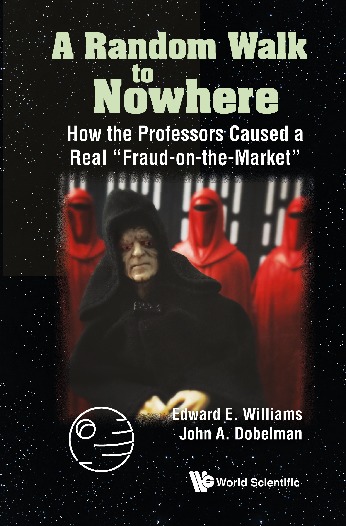
A Random Walk to Nowhere
2020-05-29 11:00:23
This book is about an intellectual fraud, one that has become part of legal doctrine that has greatly influenced decisions all the way up to the United States Supreme Court. The 'efficient market hypothesis' (EMH), born from the Random Walk t...
Read more
This book is about an intellectual fraud, one that has become part of legal doctrine that has greatly influenced decisions all the way up to the United States Supreme Court. The 'efficient market hypothesis' (EMH), born from the Random Walk theory, started out as an honest attempt to improve insights into how financial markets work, but eventually became almost a religion that every financial economist had to buy into, or risk professional crucifixion. The EMH began over a half century ago. It posits that share prices reflect all available market information, and that it is impossible to consistently outperform the market. This theory dominated research in the academic financial community from the outset, and has continued to do so for decades. Meanwhile, the evidence for above-average profit-making opportunities in the markets has been unfairly suppressed. Written for practitioners in the business, finance and legal industries, this book outlines the major issues that gave rise to the fraud, focusing on the role of statistics in the rise of what the authors call the ' New Finance .' It details the developments and results of the exclusion of other theories from efficient markets research and highlights the problems arising from a dogmatic adherence to EMH.
Less

Available Discount
No Discount available
Related Books
View All
Water Ecosystem Services
Termites of the State
Motives and Effectiveness of Forex Interventions

Exclusionary Practices
Principles of Financial Economics

Empowering Leadership of Tomorrow
Theory and Reality in Financial Economics

How to Open & Operate a Financially Successful Personal Chef Business
International Exchange of Information in Tax Matters

Equitable Principles of Maritime Boundary Delimitation
Religion and Contemporary Management
A Beginner's Guide to Mobile Marketing
Excel Basics to Blackbelt
How Would Have a Low-Cost Index Fund Approach Worked During the Great Depression?
Productivity Accounting
The Cambridge Economic History of Modern Britain

A Dictionary of the Internet

Claims Reserving in General Insurance
Teaching Entrepreneurship
State and Local Financial Instruments
Graduate Migration and Regional Development
Herding Cats
Theory and Empirical Research in Social Entrepreneurship
Handbook on the Economics of Professional Football

Oil, Democracy, and Development in Africa

Settings
Reflow text when sidebars are open.
